

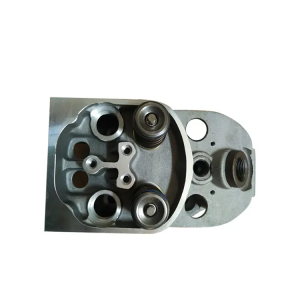
Air cooled diesel engine are primarily used in water-shortage and extreme climate environments, intermittent operation scenarios, and space-restricted equipment. Their core advantages include no cooling water requirement, compact structure, and outstanding resistance to harsh working conditions, yet they are not suitable for long-term full-load continuous operation.
1. Application Scenarios
Emergency and Temporary Power Supply
Short-term or intermittent power consumption scenarios such as municipal emergency repairs, field exploration, and temporary construction sites.
Agricultural Machinery
Tractors, harvesters and other farm equipment. They adapt to dusty farmland with drastic humidity fluctuations and feature easy maintenance.
Construction Machinery and Special Vehicles
Small road rollers, cutting machines, bridge erection vehicles, refueling trucks, heavy-duty trucks including Tatra models, taking advantage of their compact layout and high reliability.
Extreme Environment Operations
Cold highland regions, sweltering areas, deserts, plateaus and water-deficient zones. There is no risk of pipeline cracking due to freezing or shutdown caused by water shortage.
Underground and Enclosed-Space Equipment
Tunnel boring machinery and mining equipment. Their relatively low pollution helps improve the working environment.
Light-Duty Transportation and Mobile Equipment
Light trucks, auxiliary marine engines for some vessels, and railway locomotives, which reduce overall vehicle weight and simplify supporting systems.
2. Applicability Rationale and Limitations
Air cooled diesel engine dissipate heat through forced convection by cooling fans, eliminating water pumps, water tanks and antifreeze systems. Therefore, they feature flexible deployment and fewer failure points, making them ideal for equipment requiring frequent relocation, unattended operation or deployment in water-scarce regions.
However, their heat dissipation efficiency is heavily affected by ambient temperature. Sustained high-load operation easily leads to heat accumulation. For this reason, they are not recommended as prime power for stationary power stations requiring 24-hour continuous full-power output or heavy-duty long-distance trunk transportation vehicles.